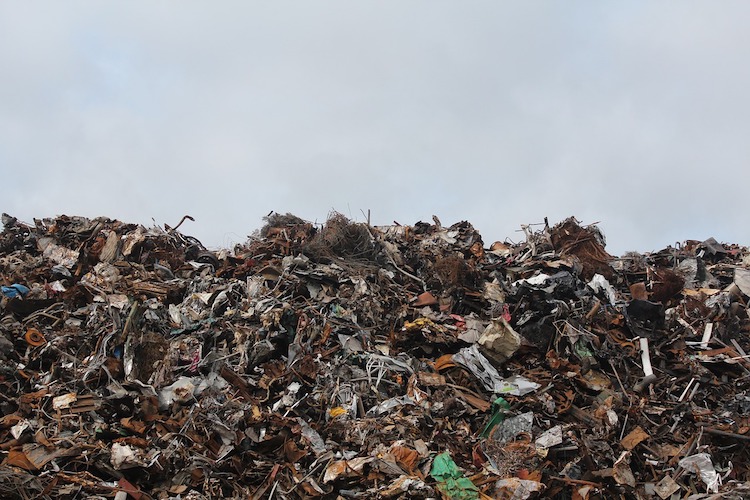

Most of us do not give too much extra though to where our trash goes after the garbage truck picks it up, although we are generally aware that trash ends up in landfills. However, the vast majority of us are unaware of what kinds of toxic chemicals lurk in landfills.

Arsenic
A grand total of nine extremely dangerous toxic chemicals are typically found within landfills. One of the nastiest among them is arsenic, which, according to Steve Parisio, arsenic is present in 7% of monitored landfill sites in New York.Arsenic is commonly used in rat poison and is linked to cancer and respiratory issues. In landfills, arsenic tends to come from microbes interacting with arsenic-carrying iron dioxides in underlying rocks.
Cadmium
Cadmium is another dangerous toxin that exists in landfills and is a chemical that is found in some food (such as shellfish). The Pollution Prevention and Abatement Handbook states that cadmium's presence in landfills is largely due to iron and steel plants, smelters, battery production, and electroplating waste.Once ingested into the body via food, water, or breathing in air, cadmium collects in the liver and kidneys and can cause renal dysfunction. The World Health Organization cites that, while cadmium mobility inside of landfills is minimum, it could take hundreds of thousands of years for cadmium to be washed out.If this isn't troubling enough for you, perhaps the next item on the list of toxic chemicals will be.
Chromium
Genetic mutations and chromium are basically synonymous. Chromium is a hard metal that often gets dumped into landfills in the forms of solid waste and slag created during chromate manufacturing processes, according to researchers.The EPA has found chromium contaminating over 69 National Priorities List sites in Michigan alone. As Dr. Michael McCabe mentions in this video, chromium 6 is a major carcinogen that can lead to lung cancer and has mutagenic effects, causing chromosomal aberrations in the lymphocytes (a subtype of white blood cells found in our immune systems).
Related: 12 Simple Things You Can Do Today to Live More Sustainable
Lead
If the threat of genetic mutations does not scare you, perhaps the next toxic chemical will. Lead is extremely well-known for causing central nervous system (CNS) dysfunctions, including mental retardation.We often worry about lead contaminating our drinking water supply, but it also ends up in landfills thanks to the discarding of electronics, which contain significant amounts of lead, according to Valerie J. Brown.Discarded electronics only make up a small fraction of what gets deposited into landfills, but studies show that about 57,500 tons of lead are disposed into U.S. landfills every year; much of this comes in the form of scrap metal. The World Health Organization claims that there is currently no known safe level of lead exposure.
Mercury
Equally disturbing is the fact that mercury is yet another common toxic chemical found in landfills. S.E. Lindberg finds that mercury from dental office waste, batteries, lights, and thermometers is dumped into landfills and gets leaked into the air via delivery and crushing of mercury waste products and landfill gas vents.Mercury is harmful to the cardiovascular system, central nervous system, and kidneys. It has also been linked to cancer. Elemental mercury effects include tremors, neuromuscular changes, and insomnia.
Nickel
Many people are highly allergic to nickel, which is often found in jewelry. While nickel, which exists in the earth's crust, is emitted into the air by natural methods, but chemical release of nickel via landfill leachate is particularly concerning.Cell phones contain toxic chemicals including nickel, and the disposal of cellular phone waste is potentially creating more nickel leakage into the environment surrounding landfills.
Benzene
Benzene is another hazardous chemical found in landfills, though, unlike the aforementioned chemicals, it might not ring a bell for some people. Benzene is highly toxic and carcinogenic.It is also known to cause genetic mutations, skin problems, and negative changes within the immune system. While it is unlikely that benzene will collect at a high enough concentration level, if it does, it will cause an explosion.Benzene is sometimes used as an industrial solvent, in the form of paint remover or de-greaser. However, due to its known adverse health effects, the use of benzene as an industrial solvent has been decreasing over the last few years. It is still considered a highly hazardous and toxic material that is disposed of in landfills.
Chloroform
When we think of chloroform, we tend to associate its anesthetic qualities that have become a trope in crime fiction. (Think of the rag placed over a victim's mouth by a mysterious, murderous hand...)However, chloroform ends up in landfills and, as Lee and Associates write, chloroform tends to therefore end up causing groundwater pollution in the area of sanitary landfills.
Ethylbenzene
Last - but certainly not least - on the list is ethylbenzene, a highly flammable organic compound that is a colorless liquid smelling similar to gasoline. Ethylbenzene can be added to gasoline as a way of increasing octane rating and reducing engine knocking.When ingested into the human body, it can damage respiration, the central nervous system, kidneys, and the liver. Ethylbenzene has been known to leak into drinking water supply located down-gradient of unregulated landfills.Ethylbenzene has been found in landfills throughout the United States, including Florida and Louisiana, and was found contaminating a total of 15 groundwater wells Wisconsin.
Related: 14 Reasons Why You Need to Start Planting Trees Today
Stay Far Away From Landfills As Possible
Local landfills are full of dangerous toxic chemicals such as the ones mentioned above. Many of these chemicals are also in the air and contaminate drinking water and ground water supplies in the areas surrounding landfills.While we common folk cannot directly control landfill regulations, we can become active in educating ourselves about health hazards and legislation. We can reduce our own consumption and waste output by reusing the products that we buy.We can also recycle certain materials that are otherwise not very biodegradable and can leak hazardous chemicals into the environment surrounding the landfills they are dumped in.