
Did you know that our skin is an organ? It's an external organ and the largest one on our body that protects us from outside elements, bacteria and germs.
It protects our organs and other operations within the body and it also helps to regulate body temperature.
This means that the skin, working in connection with all the organs in our body, plays a crucial role in the operation of all bodily functions. Because of its external position, if the skin is not properly cared for, it can also be subject to a host of minor and major adverse conditions.
If you're interested in a more detailed study, the WebMD website gives a precise summarization on everything you need to know about our skin.
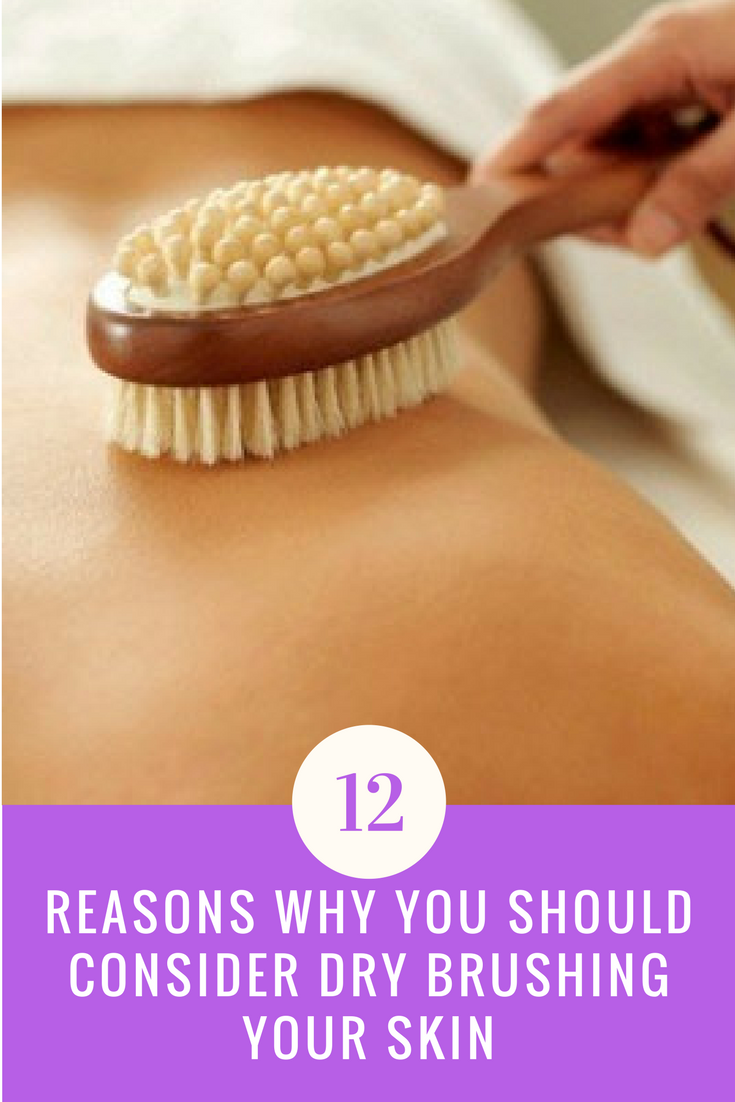
About Dry Brushing
To be clear, because no research has been done, there is no scientific proof that dry brushing lives up to all the positive claims attributed to it. On the other hand, these claims come from perhaps the best source there is: word-of-mouth by people who are using this process.
Exfoliation is an essential part of cleansing the skin. It involves the removal of dead skin cells, thereby promoting the growth of new healthy skin cells. According to the Beautiful on Raw website, we lose approximately 30,000 skin cells per minute.
It's easy to understand why myriad problems occur when these dead skin cells aren't removed regularly and properly.
Whatever Happened to Bathing?
Before showers became a norm, taking baths on a frequent and regular basis was a principal part of exfoliation. According to the Lifehack.org website, there are numerous, well documented benefits to taking hot baths regularly.
We actually saw those dead skin cells loosening up and flowing down the drain after soaking in a warm bath. Warm baths also did wonders for improving blood and lymph fluid circulation which directly affects the softening and tightening of the skin.
Today, showers have become the bane of our existence because while they serve to conveniently clean our bodies in half the time, they do little for helping to correctly cleanse our skin.
It's not likely that people will give up showering and go back to bathing because bathing is too cumbersome and time consuming.
Dry brushing could be considered as a beneficial form of replacement therapy for bathing according to the claims made for the following reasons:
- It helps in exfoliation: removal of dead skin cells is imperative;
- Through exfoliation, the growth of new cells are promoted;
- It accelerates circulation of the blood in our body which results in healthier skin, and added circulation also feeds all the other organs in our bodies;
- Better circulation also helps with the absorption of nutrients and oxygen through the skin;
- For many, increased blood circulation translates into increased energy;
- When the skin is clean, the pores are free to eliminate toxins from the body;
- Increased circulation could reduce cellulite production along with the help of diet and exercising. There's little proof that dry brushing alone will help directly toward removal of cellulite but Consumer Health Digest gives an interesting synopsis on this subject, as well as helpful tips and suggestions on dry brushing;
- Dry brushing helps to clear the surface of skin abnormalities (acne, blackheads, etc.);
- When done properly, dry brushing becomes a type of massage therapy so it also helps relax muscles and other internal organs. In short, a relaxed system contributes to a well-ordered, working system;
- It vigorously stimulates the skin, helping it to carry out its functions more effectively;
- It helps increase the circulation of fluids in our lymphatic system (part of the our circulatory and immune systems) that removes waste products through lymphatic drainage. Waste products left in our bodies is NOT a healthy idea; and
- For some users, dry brushing has been known to reduce tension because part of using the brush correctly is to develop a gentle, even flowing movement across the body and this has a massaging effect which relaxes the body.
Related: 12 Reasons Why You Should Consider Taking More Cold Showers
What Kind of Brush Should be Used
When considering dry brushing the skin, the first thought that may run across someone's mind is whether or not this could cause damage to the skin, especially after long-term use. Since this is a possibility, there are several suggestions.
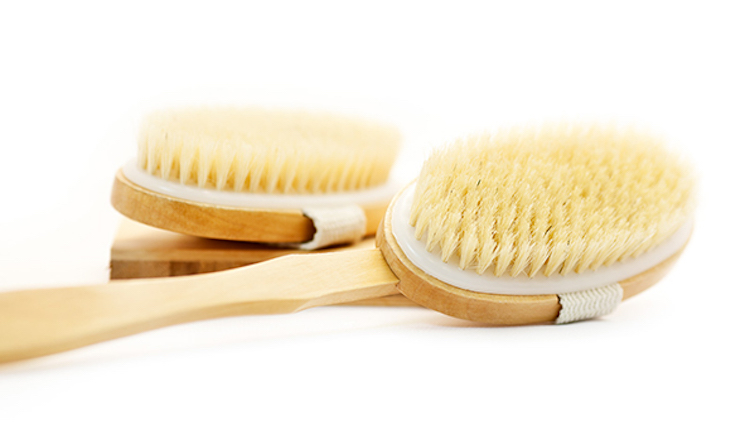
First, you should find a brush that's made of natural as opposed to synthetic bristles because natural fibers will be gentler on the skin. It has also been suggested that a brush made from the agave plant is a good choice because it will be strong enough to do the job, yet gentle enough to be soothing to the skin.
Second, purchase a brush with a handle to help get to those hard-to-reach places like the back of the legs and the back itself. The Best Reviews website can be a great help because it shows examples of types of dry brushes, explains their uses, and states the pros and cons of each.
The Correct Dry Brushing Procedure
Although dry brushing can be done any time during the day, it's recommended that it be done in the morning before showering. New users should keep in mind that developing a method of dry brushing will entail experimenting first to find the right brush to use.
Once you have what you believe to be the right brush, you then have to find out how much pressure should be applied to your skin to get the best results without scratching or irritating the skin.
Areas such as the knees, elbows and heels of the feet will probably need a more brisk scrubbing. It's suggested that you start using a brush with softer bristles and if preferred, you can move up to a firmer brush once you're more familiar with the process.
A dry brushing session should take about 10 15 minutes to complete and some advise doing it on a daily basis. Begin as follows:
- Start brushing at the bottom of your feet with the intention of moving up the body toward the heart.
- Continue moving up the back and front of the legs with long, even strokes.
- When it comes to the stomach, use circular brush movements.
- Reaching the arms, do the same as is done with the legs by brushing the front and back of each arm starting from the hands and moving up toward the heart; use circular brush movements on the underarms.
- The buttock and back area, as well as the back of the legs, may be more difficult to reach for many of us. These areas should be brushed as best you can in the same manner: start brushing low and move toward the heart.
- After finishing your entire body, hop in the shower and moisturize immediately after getting out of the shower.
Cleaning Your Brush
Feel free to use whatever cleanser you feel safe using and you decide how often your brush should be cleaned. Keep in mind that you'll want to keep your brush free from mildew with no bacteria growth on the bristles.
After vigorously washing the brush, blot out excess water on a towel and either hang up your brush or lay it with the bristles face down in a ventilated area to help it dry more quickly and completely.
What About Dry Brushing Your Face?
Since the skin on our faces is a more sensitive than the skin on the rest of our bodies, dry brushing the face, should be handled with care.
Advocates at the Health.com website did a survey with several dermatologists that seemed to agree that it was alright to dry brush the face as long as you:
- Dry brush only a couple times a week as opposed to maintaining a daily ritual;
- Choose your brush wisely being sure to settle on a brush that's soothing and not abrasive on your face; and
- dry brushing results, whether body or face, could be different for everyone so if you try it and you like what it does for you, then there's no reason why you shouldn't continue doing it.
Conclusion
So there aren't any scientific facts as a result of research done to prove that all the positive specifics stated about dry brushing are actually true. However, the word-of mouth statements giving it glowing reviews carries a lot of weight in itself.
Enough weight to urge all those who are looking for a way to clear up certain skin problems or just maintain clear healthy skin, to try dry brushing and see if you experience any of the declared statements.
Keep in mind that when participating in trial and error experiments, you should give it a reasonable amount of time. Why not give it a try for a month and see if you can share some of the beneficial, almost miraculous results that some of your fellow citizens have experienced?
Since there are also no facts out there explicitly stating that dry brushing does any harm to us, I'd say it's certainly worth trying!